Skip to content
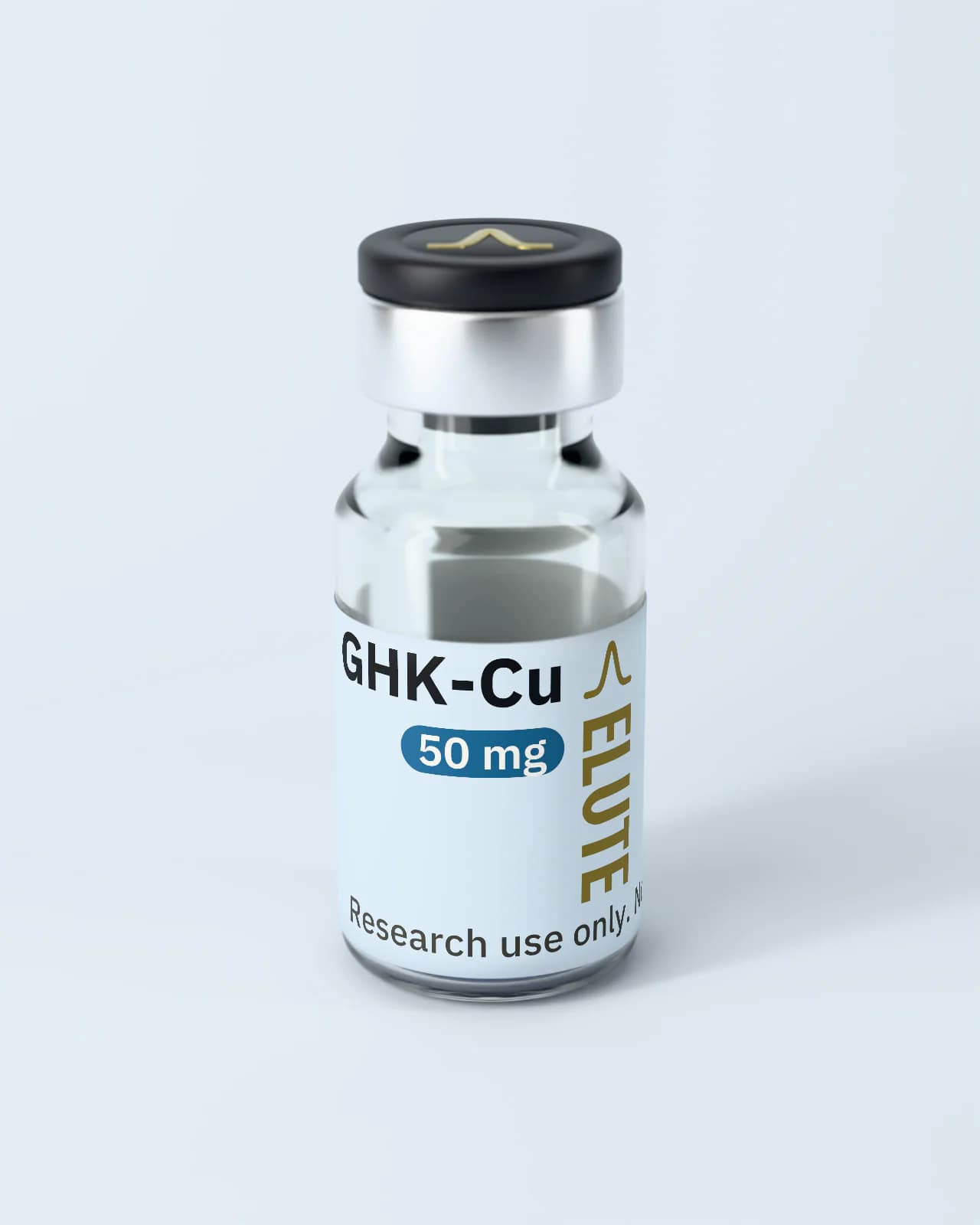
GHK-Cu 50 mg vial with its printed label

Research profile

GHK-Cu

Glycyl-L-histidyl-L-lysine copper(II) complex

  • In vitro: 5
  • Animal: 5
  • Human, observational: 0
  • Human, controlled: 2
  • Review: 3

Registered trials0, listed apart from the publications

Content reviewed October 6, 2026

View material (GHK-Cu product page)
How to read this profile
In vitro
In vitro. Cell cultures, isolated tissue or cell-free systems.
Animal
Animal. Animal models; a result in an animal is not a result in humans.
Human, observational
Human, observational. Observations in people without a controlled comparison group.
Human, controlled
Human, controlled. Studies in people with an assigned control group.
Review
Review. A synthesis of published literature, not new data.

Overview

In plain English

GHK-Cu is a very small peptide made of three amino acids (glycine, histidine and lysine, written GHK) bound to a copper ion (Cu). The peptide GHK was found in human blood serum in 1973, and the same three-amino-acid sequence occurs inside procollagen, a large structural protein of connective tissue.

Researchers have studied it mostly in cells grown in the laboratory, especially fibroblasts, the cells that produce the material between cells (the extracellular matrix), and in rats and mice. In fibroblasts they measured matrix components such as glycosaminoglycans (long sugar chains) and the enzymes that break the matrix down. In rodents they used experimental models such as a small chamber implanted in the body in which new tissue forms, damaged lungs, scald burns and knee surgery.

The evidence is mostly preclinical, meaning cell and animal studies. Two small randomized trials in people tested finished products containing a copper-peptide complex, not research material, and neither found an advantage over its comparison on objective measures. A 2026 systematic review counted 18 preclinical studies and 2 randomized controlled trials of GHK-Cu used on its own.

The most important limitation is that it is often unclear whether a result comes from the peptide or from the copper: in one cell study, copper alone reproduced the effect of the complex, while the peptide without copper did not. Much of the broad literature about GHK-Cu consists of reviews by authors connected to a company that sells it.

Key findings from published research

Selected observations from the publications listed in this profile, which are a curated subset of the literature, not all of it. Each one names the system it was observed in and links its source; a finding in cells or animals is not a result in people.

  1. In vitro

    In cultured normal human fibroblasts, GHK-Cu increased the synthesis of sulfated glycosaminoglycans (mainly dermatan sulfate and heparan sulfate) in a biphasic way: the largest increase was at nanomolar concentrations, and at higher concentrations synthesis returned to control levels. Hyaluronic acid synthesis did not change.

    (Wegrowski et al. · 1992 · PMID 1522753 (opens PubMed in a new tab))

    Limits: Cell culture with a narrow concentration window; no measurement in animals or people.

  2. In vitro

    In cultured dermal fibroblasts, GHK-Cu increased MMP-2 (an enzyme that breaks down matrix proteins) and the secretion of its inhibitors TIMP-1 and TIMP-2; copper ions alone reproduced the MMP-2 increase, while GHK without copper did not.

    (In vitro study · 2000 · PMID 11045606 (opens PubMed in a new tab))

    Limits: Cell culture; part of the activity may come from the copper rather than the peptide.

  3. In vitro

    In lung tissue from smokers with COPD, a database search (the Connectivity Map) predicted that GHK, without copper, would reverse a gene-expression pattern linked to emphysema severity; in culture, GHK restored the ability of lung fibroblasts from people with COPD to contract and remodel a three-dimensional gel.

    (Campbell et al. · 2012 · PMID 22937864 (opens PubMed in a new tab))

    Limits: A computational prediction and a cell-culture result, obtained with the copper-free peptide; not a result in people.

  4. Animal

    In a rat ACL reconstruction model (72 animals), differences from saline seen at 6 weeks, in knee laxity and, in one of the two GHK-Cu groups, in graft stiffness, were no longer present at 12 weeks; maximum load, gait and histology did not differ between groups.

    (Fu et al. · 2015 · PMID 25731775 (opens PubMed in a new tab))

    Limits: The authors describe the effect as transient; one rat model.

  5. Human, controlled

    In a randomized, evaluator-blinded trial with 86 evaluable participants, a finished formulation containing a tripeptide-copper complex did not differ from an inert placebo formulation on the trial's primary measure, while an active comparator outperformed both.

    (Bishop et al. · 1992 · PMID 1495150 (opens PubMed in a new tab))

    Limits: A finished product, not research material; the abstract names the agent only as a tripeptide-copper complex.

  6. Human, controlled

    In a randomized trial of finished products with and without GHK-Cu, in which 13 participants completed the study, computer analysis and blinded evaluators found no differences between the groups at 12 weeks; only a self-rated questionnaire differed.

    (Miller et al. · 2006 · PMID 16847171 (opens PubMed in a new tab))

    Limits: Very small; finished products, not research material.

Identifiers

Name
GHK-Cu
Scientific name
Glycyl-L-histidyl-L-lysine copper(II) complex
Synonyms
GHK; GHK copper; Glycyl-L-histidyl-L-lysine; Tripeptide-copper complex
Sequence
Gly-His-Lys (glycyl-L-histidyl-L-lysine)
Molecular formula and molar mass (free GHK)
C14H24N6O4 · 340.38 g/mol
Molecular formula and molar mass (GHK-Cu complex, cation)
C14H23CuN6O4+ · 402.92 g/mol
CAS number (GHK)
49557-75-7
CAS number (GHK-Cu)
89030-95-5
PubChem CID (GHK-Cu)
71587328 (opens in a new tab)

Evidence

Human, controlledHuman, observationalAnimalIn vitro12 listed publications

Human, animal and in vitro evidence are kept apart: where a result was observed decides what it can say. In vitro covers cultured cells and tissue studied outside the body. Reviews are listed under Publications; registered trials are listed below, apart from the publications.

Human evidence

Human, controlledHuman, observational2 listed publications

The human evidence listed in this profile is two small randomized trials, with 86 evaluable participants and 13 participants who completed the study, of finished formulations containing a tripeptide-copper complex (GHK-Cu in the smaller trial); neither used research material. In the larger trial, an active comparator outperformed both the tripeptide-copper formulation and placebo on the trial's primary measure, and no advantage of the tripeptide-copper formulation over placebo was reported. In the smaller trial, products with and without GHK-Cu did not differ on objective, blinded assessments; only a self-rated questionnaire showed a difference. No pharmacokinetic or long-term safety data in humans were located, and many of the observations in humans cited in narrative reviews were not located as controlled trials in indexed journals. A 2026 systematic review included two randomized controlled trials of GHK-Cu as a standalone intervention; not every study it included is listed in this profile, and its conclusions about the human studies are not summarized here.

Listed publications at this level

Animal evidence

Animal5 listed publications

Animal studies focus on rodents. In rats, an implanted-chamber model analyzed the tissue formed inside the chamber (dry weight, DNA, total protein, glycosaminoglycans and procollagen mRNA), and an ACL reconstruction model (72 animals) measured knee laxity, graft stiffness, maximum load, gait and histology at 6 and 12 weeks; differences seen at 6 weeks did not persist at 12 weeks, and there were no differences in maximum load, gait or histology. In mice, GHK-Cu was studied in a model of LPS-induced acute lung damage (inflammatory cytokines, oxidative stress and inflammatory cell infiltration) and in a model of experimental silicosis (pulmonary inflammatory changes and fibrosis). In a murine scald burn model, liposome-encapsulated and free GHK-Cu were compared on vessel counts and on CD31 and Ki67 staining (endothelial and proliferation markers) in the burned skin. The direction and size of these animal endpoints are not summarized in this profile. Within the indexed literature reviewed, no chronic toxicity studies, systematic pharmacokinetic studies or studies in non-rodent species were located.

Listed publications at this level

In vitro and isolated-tissue evidence

In vitro5 listed publications

The 1973 discovery work, which has no indexed abstract, described a human serum tripeptide that prolonged the survival of normal liver cells in culture and increased the growth of neoplastic liver cells. In normal human fibroblasts, GHK-Cu was associated with increased synthesis of sulfated glycosaminoglycans, with a biphasic response (1992); in dermal fibroblasts, it was associated with increased MMP-2, TIMP-1 and TIMP-2 (2000), and the MMP-2 effect was reproduced by copper ions alone. A Connectivity Map analysis identified the GHK tripeptide (without copper) as a compound predicted to reverse a gene signature of emphysematous destruction; in cultured human fibroblasts, GHK reproduced TGF-β-induced expression patterns, organized the actin cytoskeleton and increased integrin β1, and it restored the capacity of fibroblasts derived from COPD lungs to contract and remodel a three-dimensional gel in culture. In LPS-stimulated RAW 264.7 macrophages, GHK-Cu reduced reactive oxygen species and cytokines, and in a liposomal formulation it increased the proliferation of human umbilical vein endothelial cells. None of these systems reproduces the pharmacology of a whole organism.

Listed publications at this level

Registered trials

0 registered trials

Registry entries, listed apart from the publications and not counted with them. Each links to its ClinicalTrials.gov record and shows only the registered phase, design, enrollment and status, and where its results stand. Results announced by a sponsor are marked as not peer-reviewed and are not summarized here.

No registered trial is listed in this profile.

Scientific detail

The technical layer: molecular identity, the mechanisms investigated with the evidence level at which each was observed, and the limits of the evidence. The plain-English summary is under Overview.

Molecular summary

GHK-Cu is the complex formed by the tripeptide glycyl-L-histidyl-L-lysine (GHK) and a copper(II) ion. The tripeptide was described in 1973 as a component of human serum that prolonged the survival of liver cells in culture. The Gly-His-Lys sequence matches a triplet present in the α2(I) chain of type I procollagen, which led to the hypothesis that it could be released by proteolysis of the extracellular matrix during tissue damage. The tripeptide binds copper(II), and narrative reviews propose a role for the copper complex in tissue remodeling.

In the preclinical literature, GHK-Cu has been studied mainly in fibroblast cultures (glycosaminoglycans, metalloproteinases and their inhibitors), in an implanted-chamber model in rats and, more recently, for inflammatory and oxidative-stress endpoints in murine lung models. Its gene-expression profile was also examined through a Connectivity Map analysis, with follow-up experiments in cultured human fibroblasts.

The human evidence listed in this profile consists of two small controlled trials of finished formulations that are not research material.

Mechanisms investigated

Mechanistic hypotheses and observations as they were studied. The evidence level shows where each one was observed; none has been shown in people.

  1. 01Copper(II) complexation (proposed role of the copper complex)

    Review

    GHK binds copper(II) to form the GHK-Cu complex. Narrative reviews by authors affiliated with a company that sells GHK-Cu products propose a role for the copper complex in tissue remodeling. This is a proposal from reviews: a copper-delivery function of the complex has not been demonstrated in living organisms, and in one fibroblast culture study copper ions alone reproduced the effect of GHK-Cu on MMP-2 while copper-free GHK did not.

  2. 02Glycosaminoglycan synthesis in fibroblasts

    In vitro

    In normal human fibroblasts, GHK-Cu was associated with a biphasic increase in the synthesis of sulfated glycosaminoglycans (extracellular dermatan sulfate and cell-layer-associated heparan sulfate), with no effect on hyaluronic acid; at higher concentrations glycosaminoglycan synthesis returned to the level of control cultures, pointing to a narrow response window specific to the culture system.

  3. 03Modulation of metalloproteinases and their inhibitors (MMP-2, TIMP-1, TIMP-2)

    In vitro

    In cultured dermal fibroblasts, GHK-Cu increased MMP-2 levels and MMP-2 mRNA, together with secretion of TIMP-1 and TIMP-2. The effect on MMP-2 was reproduced by copper ions but not by the copper-free GHK tripeptide, indicating that part of the observed activity may be attributable to the metal. The authors interpreted this as simultaneous modulation of extracellular matrix production and remodeling within the culture setting.

  4. 04Gene-expression signature and fibroblast gel contraction (GHK without copper)

    In vitro

    A Connectivity Map query identified the GHK tripeptide, without copper, as a compound predicted to reverse a 127-gene signature associated with regional emphysema severity in lung tissue from smokers with COPD, and to induce expression patterns consistent with activation of the TGF-β pathway. In cultured human lung fibroblasts, GHK reproduced TGF-β-induced expression patterns, organized the actin cytoskeleton and increased integrin β1, and GHK or TGF-β restored the capacity of fibroblasts derived from COPD lungs to contract and remodel a three-dimensional gel. The signature comes from 8 lungs, the prediction is computational, and the cell result was obtained with the copper-free peptide; none of it has been tested in vivo.

  5. 05Inflammatory and redox pathways in murine lung models

    Animal

    In mice with LPS-induced acute lung damage and in LPS-stimulated RAW 264.7 macrophages, GHK-Cu was associated with lower TNF-α and IL-6 production, fewer reactive oxygen species and higher superoxide dismutase activity, with suppression of NF-κB p65 and p38 MAPK signaling. In a murine model of experimental silicosis, peroxiredoxin 6 (PRDX6) was identified as a protein bound by GHK-Cu, and the effects were attributed in part to inhibition of silica-induced oxidative stress in macrophages (RAW 264.7 cells, used as an alveolar macrophage model). These findings are mechanistic hypotheses in rodent models and cell lines and have not been evaluated in humans.

Limitations

  • Much of the synthesis literature comes from narrative reviews by authors affiliated with a company that sells GHK-Cu products (affiliation declared in PubMed); one systematic review (2026) was located, and 18 of the 20 studies it included are preclinical.
  • The two controlled human trials listed used finished formulations that are not research material and had small samples (13 and 86 participants), and neither showed an advantage of the copper-peptide product over placebo or the comparator on objective endpoints.
  • Glycosaminoglycan synthesis showed a biphasic response in culture, and the MMP-2 effect was reproduced by copper ions without the peptide, which makes it difficult to attribute the activity to the tripeptide.
  • The animal models are heterogeneous (implanted chambers, scald burns, lung damage, ACL reconstruction), with different endpoints and little independent replication.
  • In the rat ACL reconstruction model, the effect was transient and did not last after exposure ended.
  • According to declared affiliations, a co-author of the murine acute lung damage study is affiliated with a company.
  • No pharmacokinetic, in vivo stability or long-term safety data in humans were located.

What is not known

  • Whether effects observed in cell cultures and rodents occur in humans; the two human trials located used finished formulations and do not address this.
  • Plasma GHK concentration in healthy humans and its variation with age are cited in reviews; no primary study quantifying them is included in this profile.
  • The relative contribution of the peptide versus the copper ion to each described effect, given that copper ions alone reproduced the MMP-2 result in culture.
  • The biological relevance, outside cell culture, of the gene-expression signature obtained with the Connectivity Map.
  • The effect on tumor cell proliferation: the 1973 work described increased growth of neoplastic liver cells in culture, and no studies resolving this question were located.
  • The primary molecular target: PRDX6 binding and the NF-κB and p38 MAPK pathways have been proposed in rodent models and cell lines, without independent confirmation.
  • Whether the observations in humans cited in narrative reviews are reproducible in published controlled trials.

Publications

15 listed publications

Each publication is identified by its PubMed ID or DOI and grouped by evidence level. Each heading is our own description of what was studied. Titles, authors and journals are reproduced exactly as published; when the published wording of one of them falls outside our content rules, it is not shown here, and the record links to PubMed, where it can be read in full.

Human, controlled 2

  • Human, controlledControlled study in humans· Homo sapiens

    Randomized human trial of finished products with and without GHK-Cu: blinded objective assessments and a self-rated questionnaire

    Miller TR, Wagner JD, Baack BR, et al.Archives of Facial Plastic Surgery2006PMID 16847171 (opens PubMed in a new tab)Title on PubMedDOI 10.1001/archfaci.8.4.252 (opens the publisher record in a new tab)

    Model
    Randomized trial of finished products with or without GHK-Cu, assessed at 12 weeks by computer-assisted analysis, blinded evaluators and a self-rated questionnaire
    Sample size
    13
    Exposure
    Finished products containing GHK-Cu
    Comparator
    Finished products without GHK-Cu

    Thirteen participants completed the study. Computer-assisted analysis and blinded evaluators found no differences between the groups on the trial's objective measures at 12 weeks; only a self-rated questionnaire showed a difference between the groups (p = 0.04). The trial used finished products, not research material.

    Measured endpoints

    Objective measures at 12 weeks (computer-assisted analysis and blinded evaluators)
    No statistically significant differences between the groups with and without GHK-Cu.
    No change
    Self-rated questionnaire
    The only measure on which the groups differed (p = 0.04); it is subjective and self-reported.
    Not stated

    Limitations: Very small sample (13 participants completed the study); finished products that are not research material; the only difference was on a subjective, self-rated measure.

  • Human, controlledControlled study in humans· Homo sapiens

    Randomized, evaluator-blinded human trial: a finished tripeptide-copper formulation, an active comparator and an inert vehicle

    Bishop JB, Phillips LG, Mustoe TA, et al.Journal of Vascular Surgery1992PMID 1495150 (opens PubMed in a new tab)Title on PubMedDOI 10.1067/mva.1992.37086 (opens the publisher record in a new tab)

    Model
    Prospective, randomized, evaluator-blinded trial of three finished formulations
    Sample size
    86
    Exposure
    Finished formulation containing a tripeptide-copper complex
    Comparator
    Active comparator formulation; inert vehicle (placebo)

    Among 86 evaluable participants, the active comparator outperformed both the tripeptide-copper formulation and the inert vehicle on the trial's primary measure, and no advantage of the tripeptide-copper formulation over the vehicle was reported. The trial used a finished formulation, not research material.

    Measured endpoints

    The trial's primary measure (evaluator-blinded)
    The active comparator outperformed both the tripeptide-copper formulation and the vehicle; no advantage of the tripeptide-copper formulation over the vehicle was reported.
    No change

    Limitations: Evaluator-blinded, not double-blind; a finished formulation that is not research material; the abstract names the agent only as a tripeptide-copper complex; no advantage over the vehicle was reported.

Animal 5

  • AnimalAnimal study· Mus musculus and RAW 264.7 macrophages

    Mouse experimental silicosis model and RAW 264.7 macrophages: lung histology, fibrosis, oxidative stress and PRDX6 binding

    Bian Y, Deng M, Liu J, et al.Redox Biology2024PMID 38879894 (opens PubMed in a new tab)Title on PubMedDOI 10.1016/j.redox.2024.103237 (opens the publisher record in a new tab)

    Model
    Murine model of experimental silicosis induced by crystalline silica; in vitro experiments with the murine macrophage line RAW 264.7, used by the authors as an alveolar macrophage model
    Exposure
    GHK-Cu vs silica-only controls (mice and macrophage cultures)
    Comparator
    Silica-exposed animals without GHK-Cu

    In a murine model of experimental silicosis, pulmonary inflammatory changes and fibrosis were assessed with and without GHK-Cu; their direction is not summarized in this profile. Peroxiredoxin 6 (PRDX6) was identified as a protein bound by GHK-Cu, and the authors attributed the effects in part to inhibition of silica-induced oxidative stress in macrophages (RAW 264.7 cells, used as an alveolar macrophage model).

    Measured endpoints

    Pulmonary inflammatory changes and fibrosis in experimental silicosis
    Assessed in silica-exposed mice with and without GHK-Cu; the direction is not summarized in this profile.
    Not stated
    Oxidative stress in RAW 264.7 macrophages (alveolar macrophage model)
    Inhibition of silica-induced oxidative stress in RAW 264.7 macrophages, associated with GHK-Cu binding to PRDX6.
    Decrease

    Limitations: Murine silicosis model and a murine macrophage line; no data on exposure of humans to GHK-Cu; the PRDX6 interaction awaits independent replication; number of animals not reported in the abstract.

  • AnimalAnimal study· Mus musculus and human umbilical vein endothelial cells (HUVEC)

    Mouse scald burn model and HUVEC: liposome-encapsulated vs free GHK-Cu, vessel counts and proliferation markers

    Wang X, Liu B, Xu Q, et al.2017PMID 28370978 (opens PubMed in a new tab)Full record on PubMedDOI 10.1111/wrr.12520 (opens the publisher record in a new tab)

    Model
    Murine scald burn model; in vitro experiments in HUVEC with nanoscale liposomes encapsulating GHK-Cu
    Exposure
    Liposome-encapsulated GHK-Cu vs free GHK-Cu (mice and HUVEC cultures)
    Comparator
    Free (non-encapsulated) GHK-Cu

    In HUVEC, GHK-Cu liposomes increased the proliferation rate (by 33.1%), with higher expression of VEGF, FGF-2, CDK4 and cyclin D1. In a murine scald burn model, liposome-encapsulated and free GHK-Cu were compared on vessel counts and on CD31 and Ki67 staining (endothelial and proliferation markers) in the burned skin, and the size of the scald area was followed over time; the direction and size of these endpoints are not summarized in this profile. The results refer to a specific liposomal formulation.

    Measured endpoints

    HUVEC proliferation
    A 33.1% increase in proliferation rate with GHK-Cu liposomes.
    Increase
    Vessel counts and CD31 and Ki67 staining in burned skin
    Compared between liposome-encapsulated and free GHK-Cu (the abstract does not name the comparator for CD31 and Ki67); the direction is not summarized in this profile.
    Not stated

    Limitations: Murine scald model; according to the abstract, the main comparison was against free GHK-Cu rather than empty liposomes; no human data.

  • AnimalAnimal study· Mus musculus (C57BL/6) and RAW 264.7 macrophages

    Mouse LPS-induced acute lung damage model and RAW 264.7 macrophages: cytokines, oxidative stress and lung histology

    Park JR, Lee H, Kim SI, et al.Oncotarget2016PMID 27517151 (opens PubMed in a new tab)Title on PubMedDOI 10.18632/oncotarget.11168 (opens the publisher record in a new tab)

    Model
    Murine model of lipopolysaccharide (LPS)-induced acute lung damage; complementary experiments in LPS-stimulated RAW 264.7 macrophages
    Exposure
    GHK-Cu vs LPS-only controls (mice and macrophage cultures)
    Comparator
    LPS-exposed animals and cultures without GHK-Cu

    In macrophages and in the murine model, GHK-Cu was associated with lower production of reactive oxygen species, higher superoxide dismutase activity and lower TNF-α and IL-6 production, with suppression of NF-κB p65 and p38 MAPK signaling. Pulmonary histological changes and the infiltration of inflammatory cells into the lung parenchyma were also assessed in the mice; their direction is not summarized in this profile. The findings are limited to this acute murine model and a macrophage cell line and have not been examined in humans.

    Measured endpoints

    TNF-α and IL-6 production
    Lower levels of both cytokines in vitro and in the acute lung damage model.
    Decrease
    Reactive oxygen species and SOD activity
    Lower reactive oxygen species production and higher superoxide dismutase activity.
    Mixed
    Pulmonary histological changes and inflammatory cell infiltration
    Assessed in LPS-exposed mice with and without GHK-Cu; the direction is not summarized in this profile.
    Not stated

    Limitations: Acute murine model; no human data; one co-author affiliated with a company (declared affiliation); number of animals not reported in the abstract.

  • AnimalAnimal study· Rattus norvegicus (Sprague-Dawley)

    Rat ACL reconstruction model: knee laxity, graft stiffness, maximum load, gait and histology

    Fu SC, Cheuk YC, Chiu WY, et al.Journal of Orthopaedic Research2015PMID 25731775 (opens PubMed in a new tab)Title on PubMedDOI 10.1002/jor.22831 (opens the publisher record in a new tab)

    Model
    Rat model of unilateral ACL reconstruction; randomization to saline or one of two GHK-Cu groups (24 animals per group)
    Sample size
    72
    Exposure
    GHK-Cu vs saline
    Comparator
    Saline

    Knee laxity (side-to-side difference), stiffness of the graft complex, maximum load, gait parameters and histology were compared between the GHK-Cu and saline groups at 6 and 12 weeks. Differences in knee laxity and, in one GHK-Cu group, in graft stiffness were seen at 6 weeks but not at 12 weeks, and there were no differences in maximum load, gait parameters or histological scores; the authors described the effect as transient and not lasting after exposure ended. The direction of the 6-week differences is not summarized in this profile.

    Measured endpoints

    Knee laxity (side-to-side difference) at 6 and 12 weeks
    Differed from the saline group at 6 weeks but not at 12 weeks; the direction is not summarized in this profile.
    Not stated
    Graft complex stiffness at 6 and 12 weeks
    Differed from the saline group in one of the GHK-Cu groups at 6 weeks, with no differences at 12 weeks; the direction is not summarized in this profile.
    Not stated
    Maximum load, gait and histology
    No significant differences between groups; all grafts failed at their midsubstance during tensile testing.
    No change

    Limitations: Animal model; differences at 6 weeks only, not at 12 weeks; no differences in maximum load, gait or histology; no human data.

  • AnimalAnimal study· Rattus norvegicus (Sprague-Dawley)

    Rat implanted-chamber model: composition of the tissue formed inside the chamber

    Maquart FX, Bellon G, Chaqour B, et al.Journal of Clinical Investigation1993PMID 8227353 (opens PubMed in a new tab)Title on PubMedDOI 10.1172/JCI116842 (opens the publisher record in a new tab)

    Model
    Experimental chamber model (steel mesh cylinders implanted in rats)
    Exposure
    GHK-Cu vs saline or a control tripeptide
    Comparator
    Saline; control tripeptide L-glutamyl-L-histidyl-L-proline

    The tissue formed inside chambers exposed to GHK-Cu, saline or a control tripeptide was analyzed for dry weight, DNA, total protein, glycosaminoglycans (including the relative proportion of dermatan sulfate), type I and type III procollagen mRNA and TGF-β mRNA. The direction and size of these endpoints are not summarized in this profile.

    Measured endpoints

    Dry weight, DNA, total protein and glycosaminoglycans in chamber tissue
    Measured with GHK-Cu, saline and the control tripeptide; the direction is not summarized in this profile.
    Not stated
    Type I and type III procollagen mRNA and TGF-β mRNA
    Measured in chamber tissue; the direction is not summarized in this profile.
    Not stated

    Limitations: Animal model based on an artificial implanted chamber; no human data; the abstract does not report the number of animals.

In vitro 5

  • In vitroIn vitro study· Homo sapiens (lung tissue and primary lung fibroblasts)

    Human lung tissue gene-expression profiling, a Connectivity Map query and cultured lung fibroblasts exposed to GHK

    “A gene expression signature of emphysema-related lung destruction and its reversal by the tripeptide GHK”

    Campbell JD, McDonough JE, Zeskind JE, et al.Genome Medicine2012PMID 22937864 (opens PubMed in a new tab)DOI 10.1186/gm367 (opens the publisher record in a new tab)

    Model
    Gene-expression profiling of 64 lung tissue samples from 8 lungs of smokers with COPD; computational query of the Connectivity Map; in vitro exposure of lung fibroblasts from individuals with COPD and from former smokers without COPD to the GHK tripeptide (without copper)
    Exposure
    GHK tripeptide vs unexposed lung fibroblast cultures
    Comparator
    Unexposed fibroblasts; TGF-β as positive control

    The authors identified 127 genes associated with regional emphysema severity. Using the Connectivity Map, GHK was identified as a compound predicted to reverse that gene signature and to induce patterns consistent with activation of the TGF-β pathway. In human fibroblasts, GHK reproduced TGF-β-induced expression patterns, organized the actin cytoskeleton, increased integrin β1 and restored the capacity of fibroblasts derived from COPD lungs to contract and remodel a three-dimensional gel in culture. The authors emphasized the need for further studies on the mechanism and on COPD progression.

    Measured endpoints

    Gene signature of emphysematous destruction (Connectivity Map)
    GHK was computationally identified as a compound predicted to reverse the signature associated with emphysema severity.
    Decrease
    Integrin β1 expression and actin organization in fibroblasts
    Increased integrin β1 and organization of the actin cytoskeleton after exposure to GHK in culture.
    Increase
    Gel contraction and remodeling by fibroblasts from individuals with COPD
    GHK or TGF-β restored the capacity of fibroblasts derived from COPD lungs to contract a three-dimensional gel in culture.
    Increase

    Limitations: Gene signature derived from 8 individuals; GHK effects assessed only in cell culture and with the copper-free peptide; no in vivo or human outcome data.

  • In vitroIn vitro study· cultured dermal fibroblasts

    Dermal fibroblast cultures: MMP-2, TIMP-1 and TIMP-2 with GHK-Cu, copper ions and copper-free GHK

    Life Sciences2000PMID 11045606 (opens PubMed in a new tab)Full record on PubMedDOI 10.1016/s0024-3205(00)00803-1 (opens the publisher record in a new tab)

    Model
    Dermal fibroblast cultures; measurement of MMP-2, TIMP-1 and TIMP-2 in conditioned media
    Exposure
    GHK-Cu vs copper ions alone vs copper-free GHK tripeptide
    Comparator
    Control cultures; copper-free GHK; copper ions alone

    GHK-Cu increased MMP-2 levels and MMP-2 mRNA in cultured fibroblasts and increased the secretion of TIMP-1 and TIMP-2. The effect on MMP-2 was reproduced by copper ions but not by the copper-free GHK tripeptide, pointing to a substantial contribution of the metal to the observed activity.

    Measured endpoints

    MMP-2 and MMP-2 mRNA levels
    Increased MMP-2 in conditioned media and increased MMP-2 mRNA; the effect was reproduced by free copper but not by copper-free GHK.
    Increase
    TIMP-1 and TIMP-2 secretion
    Increased secretion of both tissue inhibitors of metalloproteinases.
    Increase

    Limitations: Cell culture; the species of the fibroblasts is not stated in the abstract; effect partly attributable to free copper; no in vivo data.

  • In vitroIn vitro study· cultured normal human fibroblasts

    Normal human fibroblast cultures: synthesis of sulfated glycosaminoglycans and hyaluronic acid

    “Stimulation of sulfated glycosaminoglycan synthesis by the tripeptide-copper complex glycyl-L-histidyl-L-lysine-Cu2+”

    Wegrowski Y, Maquart FX, Borel JPLife Sciences1992PMID 1522753 (opens PubMed in a new tab)DOI 10.1016/0024-3205(92)90504-i (opens the publisher record in a new tab)

    Model
    Normal human fibroblast cultures; labeling with tritiated glucosamine and 35S-sulfate to quantify glycosaminoglycans
    Exposure
    GHK-Cu vs no-GHK-Cu culture
    Comparator
    Control cultures without GHK-Cu

    GHK-Cu induced a biphasic, concentration-dependent increase in total glycosaminoglycan synthesis, with a maximum in the nanomolar range; at higher concentrations, synthesis returned to control levels. It preferentially increased the synthesis of extracellular dermatan sulfate and cell-layer-associated heparan sulfate, without affecting hyaluronic acid synthesis.

    Measured endpoints

    Synthesis of sulfated glycosaminoglycans
    Biphasic increase, maximal in the nanomolar range, predominantly dermatan sulfate and heparan sulfate.
    Increase
    Hyaluronic acid synthesis
    No influence of GHK-Cu on hyaluronic acid synthesis was observed.
    No change

    Limitations: Cell culture; biphasic response with a narrow window; no in vivo data.

  • In vitroIn vitro study· cultured fibroblasts

    Fibroblast cultures: protein synthesis and cell number across GHK-Cu concentrations

    Maquart FX, Pickart L, Laurent M, et al.FEBS Letters1988PMID 3169264 (opens PubMed in a new tab)Title on PubMedDOI 10.1016/0014-5793(88)80509-x (opens the publisher record in a new tab)

    Model
    Fibroblast cultures exposed to a range of GHK-Cu concentrations; measurement of protein synthesis and cell number
    Exposure
    GHK-Cu vs no-GHK-Cu culture
    Comparator
    Control cultures without GHK-Cu

    Protein synthesis by cultured fibroblasts was measured across a range of GHK-Cu concentrations, from picomolar to nanomolar, together with cell number, which did not change. The protein measured and the direction of the result are described in the original record. The authors noted that the Gly-His-Lys sequence occurs in the α2(I) chain of type I procollagen and proposed it as a possible physiological origin of the peptide.

    Measured endpoints

    Protein synthesis and cell number in fibroblast cultures
    Measured across a range of concentrations; cell number did not change, and the protein result is described in the original record.
    Not stated

    Limitations: Cell culture; no in vivo data; the abstract does not state the species of the fibroblasts, and the duration of the effect is not specified.

  • In vitroIn vitro study· cultured normal and neoplastic liver cells

    Normal and neoplastic liver cells in culture: survival and growth with a tripeptide from human serum

    Pickart L, Thaler MMNature New Biology1973PMID 4349963 (opens PubMed in a new tab)Title on PubMed

    Model
    Normal and neoplastic liver cells in culture exposed to a tripeptide from human serum; design details are not available in the indexed record
    Exposure
    Tripeptide from human serum

    Discovery work for the GHK tripeptide. The authors described a tripeptide in human serum that prolonged the survival of normal liver cells in culture and increased the growth of neoplastic liver cells. PubMed has no abstract for this record, so the cell source, design and quantitative details could not be verified.

    Measured endpoints

    Survival of normal liver cells in culture
    Prolonged survival of normal liver cells was described in the presence of the tripeptide.
    Increase
    Growth of neoplastic liver cells in culture
    Increased growth of neoplastic liver cells was described, a finding that later literature has not clarified.
    Increase

    Limitations: 1973 publication without an indexed abstract; only the finding stated in the title could be verified; cell culture system without in vivo data; includes increased growth of neoplastic cells.

Reviews 3

  • ReviewSystematic review

    Systematic review of 20 studies (18 preclinical, 2 randomized controlled trials) of GHK-Cu as a standalone intervention

    “The Regenerative Potential of GHK-Cu in Aesthetic Medicine.”

    Mokhtar J, Mohamed B, Haddad J, et al.Aesthetic Surgery Journal2026PMID 42619529 (opens PubMed in a new tab)DOI 10.1093/asj/sjag169 (opens the publisher record in a new tab)

    Model
    Systematic review (PubMed, Embase and Cochrane CENTRAL from inception through March 2026, following PRISMA) of studies of GHK-Cu as a standalone intervention

    Twenty studies were included: 18 preclinical studies and 2 randomized controlled trials. The authors synthesize preclinical data on extracellular matrix synthesis (matrix proteins and glycosaminoglycans), metalloproteinase activity, cell proliferation, inflammatory markers and delivery systems. Their conclusions about the two human trials are not summarized in this profile, and not every included study is listed here.

    Measured endpoints

    Volume and type of the included evidence (20 studies)
    18 preclinical studies and 2 randomized controlled trials were included.
    Not stated

    Limitations: Most included studies (18 of 20) are preclinical; only 2 randomized controlled trials were included; the review covers GHK-Cu as a standalone intervention only.

  • ReviewNarrative review

    Narrative review of gene-expression (Connectivity Map) data on GHK and earlier preclinical studies

    “Regenerative and Protective Actions of the GHK-Cu Peptide in the Light of the New Gene Data”

    Pickart L, Margolina AInternational Journal of Molecular Sciences2018PMID 29986520 (opens PubMed in a new tab)DOI 10.3390/ijms19071987 (opens the publisher record in a new tab)

    Model
    Narrative review focused on gene-profiling data (Connectivity Map) and earlier preclinical studies

    Narrative review that compiles the available gene-expression data for GHK and relates them to actions described in skin, pulmonary connective tissue, bone, liver and gastric mucosa in experimental models, as well as antioxidant effects, effects on inflammatory markers and effects on the proteasome system. The authors interpret the gene data as a possible explanation for the diversity of effects; most of the proposed pathways have not been validated in controlled human studies.

    Measured endpoints

    Narrative synthesis of gene pathways modulated by GHK
    Summary of pathways proposed from gene-profiling data; no pooled quantification or validation in humans.
    Not stated

    Limitations: Narrative review without systematic methodology; authors affiliated with a company in the sector (declared affiliation); extrapolation from in vitro gene signatures to physiological effects is unverified.

  • ReviewNarrative review

    Narrative review of in vitro, animal and gene-expression data on GHK by company-affiliated authors

    Pickart L, Vasquez-Soltero JM, Margolina ABioMed Research International2015PMID 26236730 (opens PubMed in a new tab)Title on PubMedDOI 10.1155/2015/648108 (opens the publisher record in a new tab)

    Model
    Narrative review of in vitro and animal studies, observations in humans and gene-expression data

    Narrative review proposing a role for GHK, as a copper complex, in tissue remodeling through effects on the synthesis and breakdown of glycosaminoglycans, metalloproteinases and their inhibitors, decorin, and the attraction of immune and endothelial cells; it also summarizes animal lesion models and observations in humans. It states that, according to database analyses, GHK changes the expression of thousands of human genes. The authors declare an affiliation with a company that sells GHK-Cu products.

    Measured endpoints

    Narrative synthesis of extracellular matrix and tissue-remodeling data
    Non-quantitative summary of in vitro, animal and human observations; no meta-analysis or formal risk-of-bias assessment.
    Not stated

    Limitations: Narrative review without systematic methodology; authors affiliated with a company that sells GHK-Cu products (declared affiliation); several of the observations in humans that it cites were not located as controlled trials published in indexed journals.

For laboratory research use only. Not for human or veterinary use or consumption. Not for diagnostic use. Not evaluated by the U.S. FDA.